Our website uses cookies which are necessary for running the website and for providing the services you request. We would also like to set the following optional cookies on your device. You can change these settings any time later by clicking "Change cookie settings" at the bottom of any page. For more information, please read our Cookie Information.
These cookies collect information such as how many people are using our website or which pages are popular, helping us improve the customer experience. Disabling these cookies means we won’t be able to collect information to enhance the experience.
These cookies help us understand what interests you so we can show you relevant ads on other websites. Disabling these cookies means we will not be able to show you personalized ads.
Municipal water utilities are under increasing pressure to deliver safe drinking water, reduce water losses, improve operational efficiency, and maintain accurate billing. As urban populations continue to grow and water infrastructure becomes more complex, reliable flow measurement has become an essential part of modern water supply systems.
Among the many types of water meters available today, the Electromagnetic Water Meter has become a preferred solution for measuring water flow in municipal networks. Its high accuracy, wide measurement range, and ability to operate without moving parts make it suitable for applications throughout the water distribution system.
This article explores how electromagnetic flow meters are used in municipal water supply systems, their working principles, key installation locations, and the benefits they provide for water utilities.
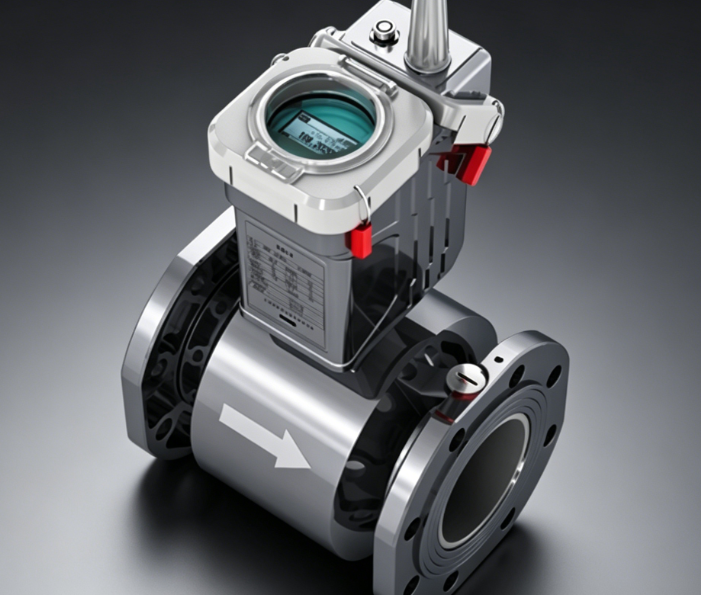
An Electromagnetic Water Meter is a type of flow measurement device based on the principle of electromagnetic induction. It measures the velocity of a conductive fluid flowing through a pipe and converts that information into volumetric flow data.
The meter generates a magnetic field inside the measuring tube. When a conductive fluid such as potable water passes through this magnetic field, a voltage is induced. The generated voltage is directly proportional to the flow velocity, allowing the instrument to calculate the flow rate accurately.
Unlike mechanical water meters, electromagnetic flow meters contain no moving components inside the measuring section, reducing wear and maintenance requirements over time.
The operating principle follows Faraday's Law of electromagnetic induction:
Because most drinking water and treated water contain dissolved minerals, they function as conductive fluids suitable for electromagnetic measurement.
Municipal water networks transport large amounts of water from water treatment plants to consumers through extensive supply networks. Accurate measurement is necessary for operational management, billing, leakage analysis, and system planning.
Electromagnetic water meters offer several advantages:
Municipal utilities require precise data for billing and network management. Electromagnetic meters typically maintain accuracy even under varying flow conditions.
Traditional water meters may experience mechanical wear over time. Electromagnetic flow meters eliminate this issue, helping reduce maintenance costs.
Municipal systems often experience changing demand throughout the day. Electromagnetic meters can accurately measure both low and high water flow conditions.
Because the measuring tube is unobstructed, there is little pressure drop across the meter.
The absence of mechanical components contributes to stable long-term operation.
Water treatment plants serve as the starting point of the municipal water supply chain. Electromagnetic water meters are installed at:
These installations help operators monitor the total amounts of water entering and leaving the facility.
Accurate production data allows utilities to evaluate treatment efficiency and optimize plant operations.
Large transmission mains carry potable water from treatment facilities to urban distribution zones.
Electromagnetic water meters installed along these pipelines provide:
Operators can compare measurements between different sections of the water distribution network to identify unexpected losses.
Many modern utilities divide their distribution network into District Metered Areas (DMAs).
Electromagnetic water meters are commonly installed at DMA boundaries to:
When flow data indicates unexplained consumption, maintenance teams can investigate possible pipe leaks or unauthorized usage.
Storage tank facilities are used to balance supply and demand throughout the day.
Electromagnetic meters help monitor:
Accurate flow records support better operational planning and infrastructure management.
Pump stations move water throughout municipal supply networks.
Installing electromagnetic water meters at pump stations enables operators to:
The collected data supports preventive maintenance and operational optimization.
Many municipalities use large-diameter electromagnetic water meters for:
Reliable meter reading data ensures transparent billing and accurate accounting of delivered water.
As utilities adopt digital technologies, electromagnetic flow meters have become an important component of smart water systems.
Modern devices often support:
This information helps operators make faster decisions and improve overall management of the water distribution system.
Flow measurement data contributes to maintaining water quality throughout the supply network.
Utilities use flow information to:
Accurate flow records can also help investigate incidents involving cross connections or contamination risks.
By understanding how water moves through the distribution network, operators can take corrective actions more effectively.
Reducing non-revenue water remains a major objective for municipal utilities.
Electromagnetic water meters support water loss reduction by helping utilities:
The availability of accurate flow rate data makes water balance analysis more reliable.
Flow measurement should be incorporated into the design of water distribution infrastructure from the planning stage.
When selecting meter locations, engineers typically consider:
Proper meter placement improves visibility across the water distribution network and supports long-term operational objectives.
To obtain accurate measurements, electromagnetic water meters should be installed according to manufacturer recommendations.
Common guidelines include:
Correct installation helps maximize meter performance and measurement stability.
The water industry continues to move toward digital infrastructure and data-driven operations.
Future developments may include:
Electromagnetic flow meters are expected to remain a key source of high-quality flow data within these evolving systems.
Electromagnetic Water Meters have become widely used throughout municipal water supply systems due to their accuracy, durability, and ability to measure water flow without mechanical wear. From water treatment plants and transmission pipelines to storage tank facilities and customer metering applications, these instruments provide the data needed for efficient operation of modern water supply networks.
As cities continue to modernize infrastructure and pursue smarter management strategies, electromagnetic flow meters will remain an important tool for monitoring drinking water distribution, improving water quality, reducing losses, and supporting reliable service delivery.
The main advantage is accurate flow measurement without moving parts. This design reduces maintenance requirements while maintaining long-term measurement stability.
Yes. Potable water contains sufficient conductivity for electromagnetic measurement and is one of the most common applications for electromagnetic flow meters.
They are commonly installed at water treatment plants, pumping stations, transmission mains, storage tank facilities, DMA boundaries, and bulk customer connections.
They provide accurate flow data that allows utilities to compare inflow and consumption volumes, helping identify leaks, unauthorized usage, and other sources of water loss.
Yes. Electromagnetic water meters are available in a wide range of sizes and are frequently used in large municipal pipelines.
No. Their full-bore design creates very little obstruction inside the pipe, resulting in minimal pressure loss.
Yes. Many modern electromagnetic water meters include digital communication protocols that support remote meter reading, SCADA systems, and smart water network applications.
They provide reliable measurement of water flow, maintain high accuracy over long periods, require relatively low maintenance, and integrate easily with modern monitoring platforms.
