Our website uses cookies which are necessary for running the website and for providing the services you request. We would also like to set the following optional cookies on your device. You can change these settings any time later by clicking "Change cookie settings" at the bottom of any page. For more information, please read our Cookie Information.
These cookies collect information such as how many people are using our website or which pages are popular, helping us improve the customer experience. Disabling these cookies means we won’t be able to collect information to enhance the experience.
These cookies help us understand what interests you so we can show you relevant ads on other websites. Disabling these cookies means we will not be able to show you personalized ads.
In industrial fluid measurement, choosing between an electromagnetic flow meter and a mechanical flow meter depends on fluid type, required high precision, maintenance expectations, and installation conditions. Both devices are widely used in flow rate measurement across water treatment, chemical processing, and manufacturing systems.
This article provides a flow meter comparison focused on working principles, accuracy, applications, and long-term performance to help determine the more suitable option for different industrial needs.
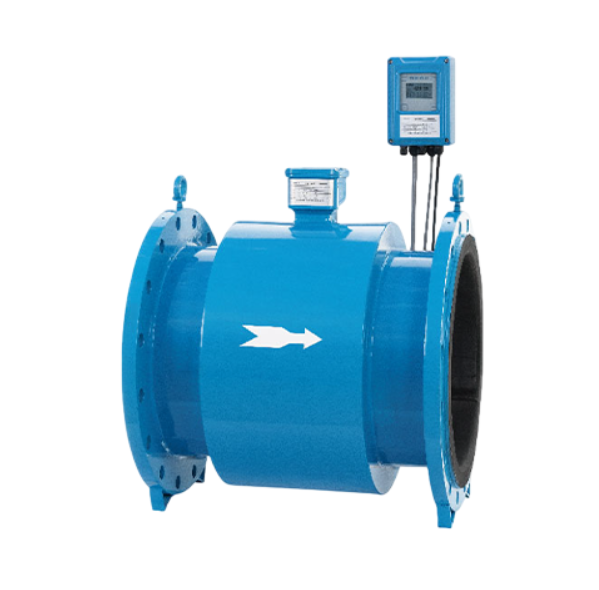
An electromagnetic flow meter (also known as a magnetic flow meter) measures flow using a magnetic field and conductive fluid behavior.
It operates based on Faraday's Law of Electromagnetic Induction, where a conductive liquid passing through a magnetic field generates a voltage proportional to its velocity.
A mechanical flow meter measures flow using moving components driven by fluid flows. Common types include turbine meters, piston meters, and oval gear flow meters.
The fluid physically moves internal parts, and the number of rotations or displacements is converted into flow rate.
For industries requiring high accuracy and stable long-term performance, electromagnetic systems are often preferred. The absence of moving parts reduces measurement drift caused by wear.
Mechanical systems remain effective in simpler environments where fluid type and cleanliness are controlled.
When selecting a flow meter to measure flow, the following factors should be evaluated:
Understanding these factors ensures better alignment between the device and operational requirements.
There is no universal winner in flow meter comparison. The choice depends on application:
Electromagnetic flow meters use a magnetic field and induced voltage, while mechanical flow meters rely on moving parts driven by fluid flows.
No. They require a conductive fluid, so oils and gases are not suitable.
They provide reliable readings initially, but accuracy may decrease due to wear of internal components such as oval gear systems.
Electromagnetic flow meters are preferred due to their resistance to contamination and ability to handle conductive fluids.
Yes. Regular cleaning and part replacement are required to maintain stable flow rate measurement.
In modern industrial applications, electromagnetic flow meters are widely chosen for high accuracy and durability in conductive fluid environments. Mechanical flow meters remain practical for simpler, non-conductive fluid measurement tasks.
The final decision should be based on fluid type, required precision, and long-term operational conditions.
