Our website uses cookies which are necessary for running the website and for providing the services you request. We would also like to set the following optional cookies on your device. You can change these settings any time later by clicking "Change cookie settings" at the bottom of any page. For more information, please read our Cookie Information.
These cookies collect information such as how many people are using our website or which pages are popular, helping us improve the customer experience. Disabling these cookies means we won’t be able to collect information to enhance the experience.
These cookies help us understand what interests you so we can show you relevant ads on other websites. Disabling these cookies means we will not be able to show you personalized ads.
Accurate water measurement is essential for water utilities, industrial facilities, treatment plants, and commercial buildings. As demand for reliable flow measurement continues to increase, many operators are replacing traditional mechanical meters with advanced electromagnetic water meter technologies.
An electromagnetic water meter provides highly accurate flow measurement without moving parts, making it suitable for a wide range of water and wastewater applications. Based on the principle of electromagnetic induction, these meters deliver stable performance, low maintenance requirements, and long service life.
This article explains how electromagnetic water meters work, their advantages, common applications, and what to consider when selecting an electromagnetic water meter manufacturer.
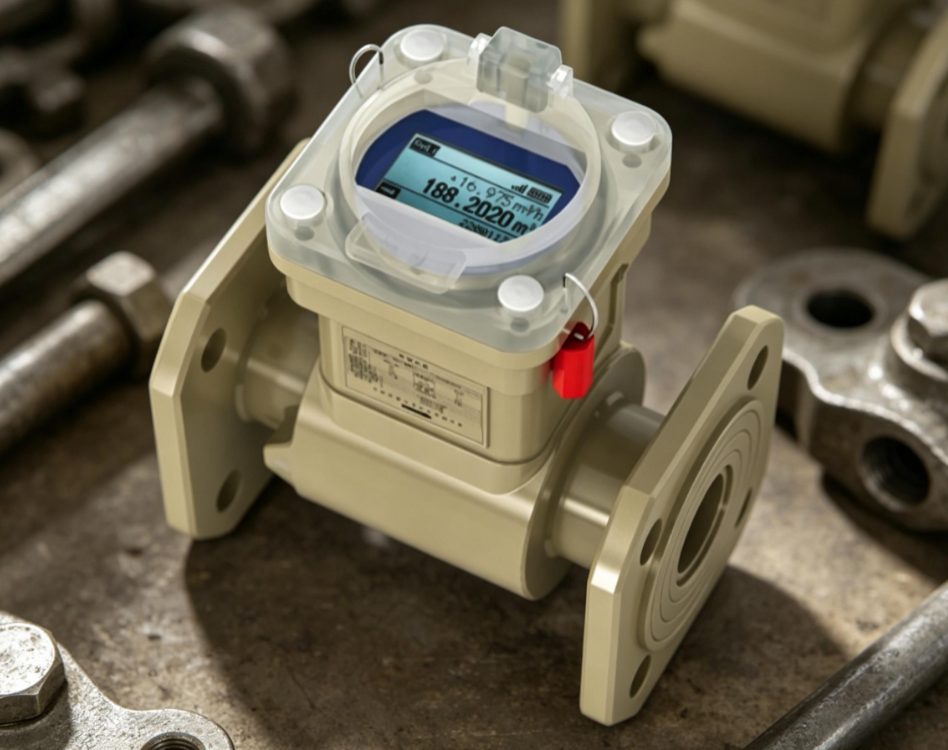
An electromagnetic water meter is a flow measurement device designed to measure the flow rate of conductive liquids flowing through a pipe.
Unlike mechanical meters that use gears, turbines, or impellers, an electromagnetic water meter measures flow electronically using a magnetic field and electrodes.
Because there are no moving parts inside the measuring tube, the meter experiences minimal wear and maintains measurement accuracy over long periods.
Electromagnetic water meters are commonly used for:
The operating principle of an electromagnetic water meter is based on electromagnetic induction, also known as Faraday's Law.
When a conductive fluid flows through a magnetic field, a voltage is generated.
The generated voltage is directly proportional to the flow velocity of the liquid.
An electromagnetic water meter consists of:
As the conductive fluid passes through the measuring tube, the coils create a magnetic field across the pipe. Electrodes mounted inside the meter detect the induced voltage generated by the moving liquid.
The transmitter converts this voltage into a flow measurement value and displays the result as flow rate, velocity, or totalized volume.
Electromagnetic induction occurs when a conductor moves through a magnetic field.
In an electromagnetic water meter:
The faster the conductive fluid moves through the pipe, the greater the induced voltage.
This relationship allows the meter to calculate flow accurately across a wide operating range.
One important requirement for electromagnetic flow measurement is that the liquid must be electrically conductive.
Examples of suitable conductive fluid applications include:
Non-conductive fluids such as oils, hydrocarbons, and distilled water generally cannot be measured accurately using electromagnetic flow meters.
Most water applications naturally provide sufficient conductivity for reliable operation.
The measuring tube provides the flow path for the liquid.
Its internal lining protects the meter from corrosion and chemical attack.
Common liner materials include:
Electromagnetic coils generate a stable magnetic field across the flow tube.
The strength and consistency of the magnetic field directly influence measurement performance.
Modern electromagnetic flow meters use advanced excitation technologies to improve stability and reduce signal noise.
Electrodes detect the voltage generated by electromagnetic induction.
Electrode materials are selected according to fluid characteristics.
Common materials include:
The converter processes the electrical signal and calculates flow values.
Many modern transmitters provide:
Electromagnetic water meters typically achieve accuracy levels of ±0.2% to ±0.5% of reading.
This level of precision supports billing, process control, and network management.
Unlike mechanical meters, electromagnetic flow meters contain no moving components.
This design reduces:
The full-bore design allows liquid to flow freely through the meter.
As a result, pressure loss is minimal compared with some alternative flow measurement technologies.
Electromagnetic flow meters can accurately measure both low and high flow rates.
This flexibility makes them suitable for varying operating conditions.
The absence of moving parts contributes to long-term reliability and reduced maintenance costs.
Many installations remain in operation for years with minimal servicing.
Utilities use electromagnetic water meters to monitor:
Accurate measurement helps utilities improve water accountability and reduce non-revenue water.
Electromagnetic flow meters perform well in wastewater applications because they can handle:
This makes them a common choice for treatment facilities.
Industries use electromagnetic water meter solutions for:
Agricultural irrigation systems use electromagnetic flow meters to manage water allocation and improve efficiency.
Accurate measurement helps operators optimize water use while reducing waste.
Selecting the right electromagnetic water meter manufacturer involves evaluating several factors.
Consider:
Look for meters that comply with recognized international standards and certifications.
Verify the manufacturer's published accuracy specifications and calibration procedures.
Ensure the manufacturer offers suitable liners and electrode materials for your application.
Modern systems should support integration with SCADA, IoT platforms, and remote monitoring systems.
Reliable after-sales service can simplify installation, commissioning, and maintenance.
An experienced electromagnetic water meter manufacturer often provides better application guidance and product customization options.
Proper installation improves measurement accuracy and long-term performance.
Recommended practices include:
Following manufacturer guidelines helps achieve optimal results.
Advances in digital technologies continue to improve electromagnetic flow meters.
Emerging developments include:
These innovations help utilities and industrial operators gain better visibility into system performance.
An electromagnetic water meter provides accurate, reliable, and maintenance-friendly flow measurement for a wide range of water applications. By using the principles of electromagnetic induction and a carefully controlled magnetic field, these devices measure the flow of conductive fluid without moving parts or significant pressure loss.
From municipal drinking water systems to industrial process applications, electromagnetic flow meters continue to be one of the most widely used technologies for modern flow measurement. Choosing an experienced electromagnetic water meter manufacturer and following proper installation practices can help ensure long-term performance and measurement reliability.
An electromagnetic water meter is a flow measurement device that uses electromagnetic induction to measure the flow rate of conductive liquids flowing through a pipe.
When a conductive fluid moves through a magnetic field, a voltage is generated. The meter measures this voltage and calculates the flow rate.
Electromagnetic flow meters rely on the electrical conductivity of the liquid to generate a measurable signal. Non-conductive fluids cannot produce the required voltage.
Benefits include high accuracy, no moving parts, low pressure loss, long service life, and minimal maintenance requirements.
They are widely used in drinking water systems, wastewater treatment plants, industrial facilities, irrigation networks, and municipal water distribution systems.
Most modern electromagnetic water meters offer accuracy ranging from ±0.2% to ±0.5% of the measured value.
Yes. Electromagnetic flow meters are commonly used for wastewater because they can handle liquids containing suspended solids and other impurities.
Evaluate product quality, accuracy, material compatibility, communication options, technical support, industry experience, and certification compliance before selecting a manufacturer.
