Our website uses cookies which are necessary for running the website and for providing the services you request. We would also like to set the following optional cookies on your device. You can change these settings any time later by clicking "Change cookie settings" at the bottom of any page. For more information, please read our Cookie Information.
These cookies collect information such as how many people are using our website or which pages are popular, helping us improve the customer experience. Disabling these cookies means we won’t be able to collect information to enhance the experience.
These cookies help us understand what interests you so we can show you relevant ads on other websites. Disabling these cookies means we will not be able to show you personalized ads.
Water meters are often installed in outdoor pits, underground chambers, and environments exposed to moisture, flooding, or dust. In these conditions, device protection becomes a key consideration for long-term stability.
An IP68 water meter is designed for harsh environments where water exposure is frequent or continuous. Compared with standard water meters, an IP68-rated model provides sealed protection against dust and prolonged water immersion.
This article explains what IP68 means, how a waterproof water meter works, and what to consider when selecting water meters for demanding installations.
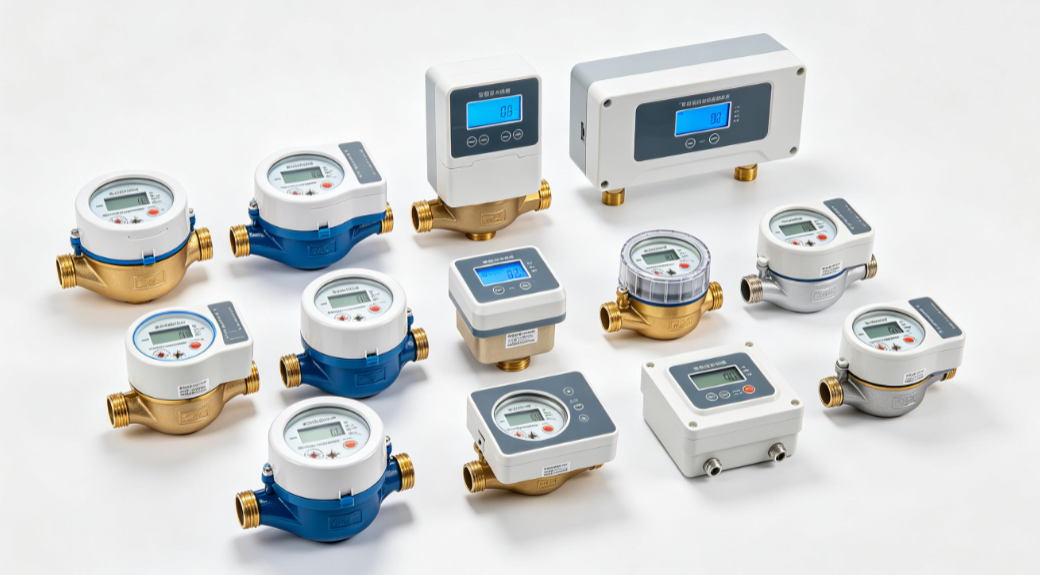
An IP68 water meter is a measuring device that follows the IP (Ingress Protection) rating system.
In simple terms, an IP68 water meter is built to operate even when fully submerged in water for extended periods, depending on manufacturer specifications.
This makes it suitable for underground installations, flooded meter boxes, and humid environments.
Water meters installed in real-world environments are often exposed to:
Without proper sealing, moisture can enter electronic components, causing measurement errors or device failure.
A waterproof water meter with IP68 protection reduces the risk of:
This level of protection supports stable long-term operation in outdoor and underground conditions.
An IP68-rated water meter is not only sealed on the outside; its internal design is also optimized for environmental resistance.
Key design features include:
The enclosure is tightly sealed using industrial-grade gaskets and ultrasonic welding to prevent water entry.
Sensitive components are protected with resin or protective coatings to resist moisture.
Materials such as stainless steel and engineered polymers are used to extend service life.
Cable glands and connectors are designed to prevent water seepage.
These structural elements work together to maintain performance even in submerged conditions.
Different technologies are used in modern water meters, and IP68 protection can be applied across several types.
Traditional water meters using mechanical rotation can be upgraded with sealed housings for outdoor durability.
These meters use sound waves instead of moving parts, making them suitable for fully sealed IP68 designs.
Many modern smart systems combine IP68 protection with digital communication for remote reading and monitoring.
These meters are widely used in smart water infrastructure projects.
| Feature | IP68 Water Meter | Standard Water Meter |
|---|---|---|
| Water resistance | Full immersion protection | Limited protection |
| Dust protection | Fully sealed | Partial |
| Installation environment | Underground / flooded areas | Dry or controlled areas |
| Lifespan in harsh conditions | Longer | Shorter |
| Maintenance needs | Lower | Higher |
The difference becomes more noticeable in environments where moisture exposure is continuous.
IP68 water meters are commonly installed in:
In these environments, exposure to water is not occasional but part of normal operating conditions.
The sealed structure allows continuous operation even when surrounded by water.
Less exposure to moisture reduces internal damage risk, which lowers maintenance requirements.
Stable electronics help maintain consistent water measurement readings.
Protection against corrosion and water ingress supports extended operational lifespan.
Many IP68 water meters support remote communication, making them suitable for smart water networks.
Even with IP68 protection, proper installation still affects performance.
Recommended practices include:
Correct installation helps maintain stable operation over time.
Modern water infrastructure often integrates IP68 water meters into digital monitoring systems.
These systems allow:
When combined with smart platforms, waterproof water meters support more consistent data collection across distributed networks.
When selecting water meters for harsh environments, consider:
Not all installations require IP68, but environments with frequent immersion usually benefit from it.
IP68 indicates resistance to immersion under defined conditions, not unlimited depth or time.
Different manufacturers apply different sealing methods and test standards.
It reduces maintenance frequency but does not remove the need for inspection.
An IP68 water meter is designed for environments where moisture, flooding, or dust exposure is unavoidable. Compared with standard water meters, it provides stronger protection for underground and outdoor installations.
A properly designed waterproof water meter supports stable measurement, reduces environmental damage risks, and fits well into modern smart water systems.
Understanding IP68 specifications helps operators select suitable devices for long-term water measurement performance.
IP68 means the water meter is fully dust-tight and can withstand continuous immersion in water under specified conditions defined by the manufacturer.
Yes, but only within the depth and time limits specified by the manufacturer’s testing standards.
A waterproof water meter is a general term, while IP68 water meters follow a defined international protection rating standard.
They are used in underground meter pits, flood-prone areas, industrial sites, and outdoor water distribution systems.
Yes. Although they are highly resistant to water and dust, periodic inspection is still recommended for long-term accuracy and performance.
Yes. Many IP68 water meters are designed for smart water metering applications with remote reading and data transmission capabilities.
